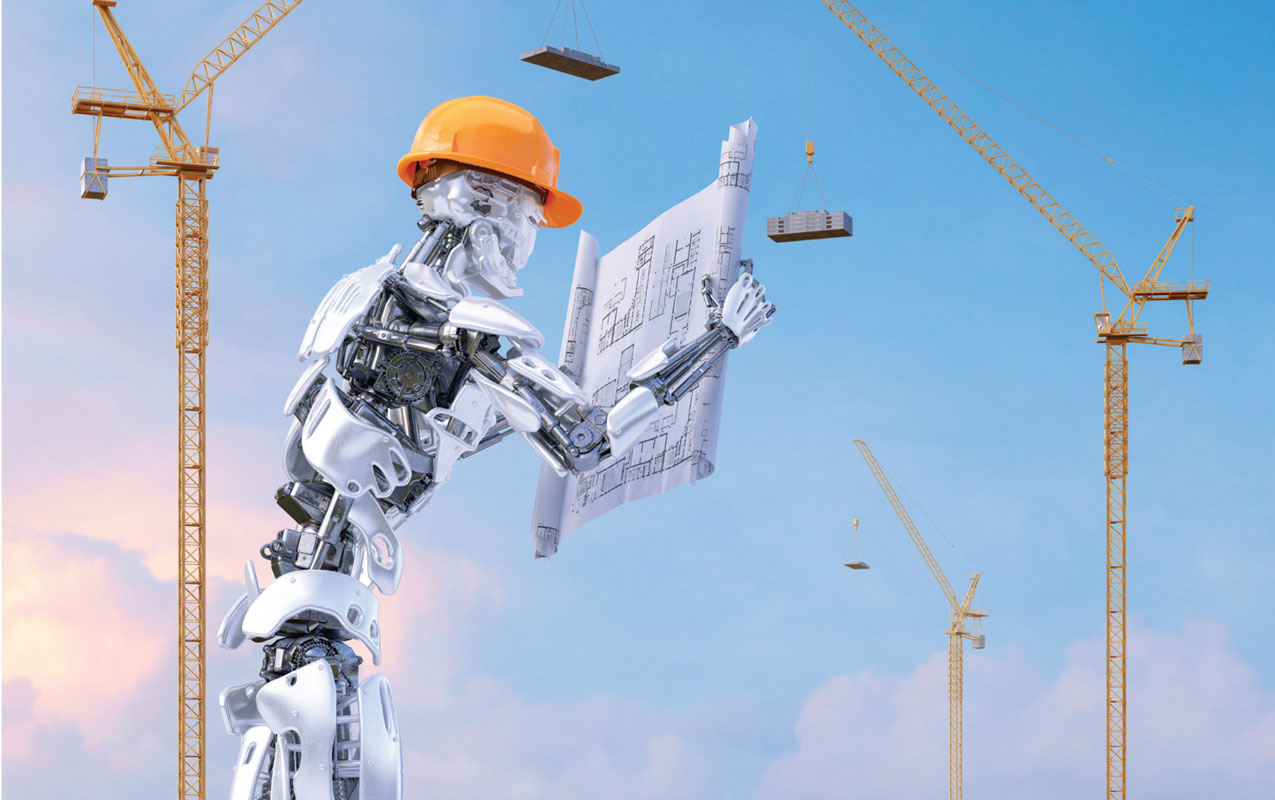
Artificial intelligence (AI) has quickly moved from a theoretical concept to a practical business tool. For most businesses, AI is no longer a distant innovation—it is already influencing how projects are designed, managed, priced, and delivered. Before adopting AI, however, leaders must understand what AI is, how it evolved, and what foundational considerations matter most for professional services organizations.
What Is Artificial Intelligence?
Artificial intelligence refers to systems that can perform tasks that typically require human judgment—such as recognizing patterns, generating content, or making decisions—by learning from data rather than following rigid instructions. AI is not a single capability, but a family of approaches that show up in different ways across organizations. AI is specifically disrupting the analysis and use of unstructured data (data in documents instead of databases), previously reserved to humans.
Predictive AI analyzes historical data to forecast outcomes or identify risk. In construction, this is already being used to predict schedule delays, safety incidents, and cost overruns by analyzing past project data, change orders, and weather patterns. Engineering firms use predictive models to anticipate equipment failures or infrastructure maintenance needs, reducing downtime and unplanned costs.
Generative AI creates new content—text, images, drawings, or summaries. Architecture firms are beginning to use generative AI to produce earlystage design concepts, massing studies, and clientready narratives faster than traditional workflows allow. In construction and engineering firms, generative AI is frequently applied to draft RFIs, summarize specifications, create project status reports, and accelerate proposal development.
Agentic AI represents the next phase. These systems can plan and execute multistep actions across tools—within defined guardrails. For example, an AI agent could review daily field reports, flag schedule risks, extract action items, and update a project dashboard automatically. While still emerging, this capability points toward more autonomous project coordination and operational support.
A Brief History of AI—and Why It Matters Now
AI as a concept harkens back to the 1950s, when early computer scientists explored whether machines could simulate human reasoning. Progress was slow for decades due to limited computing power and data. The last 15 years marked a turning point: cloud computing, inexpensive storage, and vast amounts of digital data made modern AI practical at scale.
For AEC firms, this timing matters. The industry has historically lagged in digitization, but recent adoption of BIM, project management platforms, and cloud collaboration has created the data foundation AI depends on. In other words, AI is accelerating now because the industry is finally ready for it.
RealWorld Applications in AEC Firms
Across construction, architecture, and engineering, AI is already delivering tangible value:
- Construction firms use AI to analyze jobsite images and sensor data to identify safety risks, detect quality issues, and track progress against schedules. Some firms use predictive models to flag subcontractors or activities that historically correlate with delays or claims.
- Architecture firms apply generative AI to speed up conceptual design, explore alternatives, and translate technical ideas into clientfriendly language. AI is also being used to search building codes, zoning rules, and past project libraries more efficiently.
- Engineering firms leverage AI for design optimization, infrastructure monitoring, and asset management. Predictive analytics help prioritize maintenance, while AIassisted modeling improves accuracy and reduces manual rework.
In all cases, the most successful uses of AI augment professional judgment rather than replace it.
Foundational Concepts Before Adopting AI
Before implementing AI, AEC leaders should focus on several core considerations:
- Business Alignment
AI should support specific outcomes—improved margins, reduced risk, faster delivery—not abstract innovation goals. Start with real problems that consume time, create risk, or limit scale. - Data Quality and Governance
AI depends on reliable data. Inconsistent project records, unmanaged file systems, or unclear data ownership will undermine results. Governance and security are not optional, especially when client and project data are involved. - People and Process Readiness
AI changes workflows. Project managers, designers, and engineers must understand how AI fits into their work and where human judgment remains essential. Adoption fails when change management is ignored. - Risk, Compliance, and Trust
Firms must consider bias, intellectual property, regulatory exposure, and professional liability. Clear guardrails and accountability are critical—particularly in regulated environments.
The Path Forward
AI is not a silver bullet, and it is not a onetime investment. For AEC firms, it is a capability that must be integrated thoughtfully into operations, culture, and strategy. Organizations that treat AI as an enabler—supporting better decisions, stronger collaboration, and more resilient delivery—will gain a meaningful advantage.
The question is no longer whether AI belongs in construction, architecture, and engineering. The question is how intentionally—and responsibly—you choose to use it.